Throughout history, there have been people who were uniquely prepared or positioned for a specific time. Fifty-three years ago, America experienced that unique time during a deeply divided “us vs them” environment and unprecedented political events.
Today’s post and the following two weeks’ posts provide relevant historical facts and leadership wisdom from that time.
On October 10, 1973, Vice President Spiro Agnew resigned to avoid prosecution for tax evasion and bribery.
Under the 25th Amendment, President Richard Nixon appointed House Minority Leader Gerald Ford as Vice President on December 6, 1973.
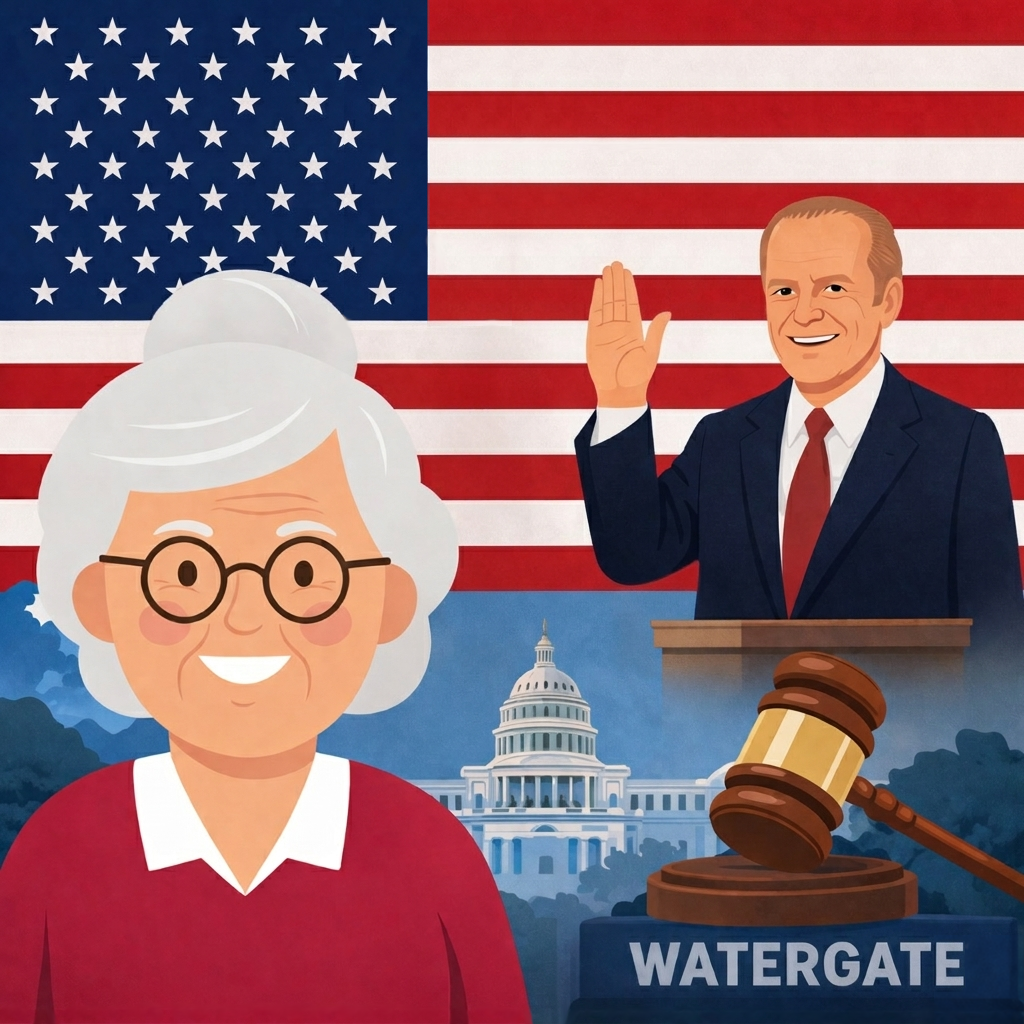
On August 9, 1974, President Nixon resigned amid the Watergate scandal to avoid an almost certain impeachment, conviction, and removal. The free press, the people, and two branches of government (Congress and the Courts) held the third branch (the President) accountable.
Following the Constitution, Vice President Ford was automatically sworn in as President on August 9, 1974. Within eight months, Ford went from House Minority Leader to Vice President to President of the United States.
Some American grandmothers lived through those unprecedented times. They observed the three branches of government at work as the Founding Fathers designed them. Today, as a nation, we, too, trust that the Constitution will be followed and implemented as designed.
“The world is ever conscious of what Americans are doing, for better or for worse, because the United States today remains that most successful realization of humanity’s universal hope. The world may or may not follow, but we lead because our whole history says we must. Liberty is for all men and women as a matter of equal and unalienable right. The establishment of justice and peace abroad will in large measure depend upon the peace and justice we create here in our own country, for we still show the way.” – President Gerald Ford, Bicentennial Remarks at Independence Hall, Philadelphia, Pennsylvania, July 4, 1976